
Jersey City, NJ
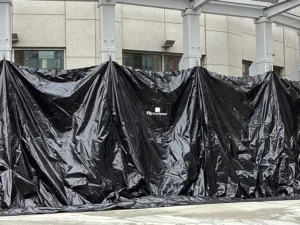 Located just blocks from the Hudson River on a 15-acre campus, Jersey City Medical Center’s (JCMC) Wilzig Hospital experienced significant flooding during Hurricane Sandy. That event led to a comprehensive upgrade in how the facility protects its Level II trauma center, patient care areas and critical building systems from future coastal storms. The resulting micro-resiliency project, supported in part by the Federal Emergency Management Agency (FEMA), created a layered and highly engineered flood defense strategy around the campus.
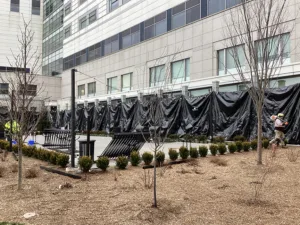 The system includes approximately 1,500 feet of reinforced concrete perimeter floodwalls along with roughly 500 feet of deployable protection. These deployable barriers are Flex-Gate® Bottom Deploy Flood Barriers from PS Flood Barriers®, stored at the point of use and ready for rapid deployment when a storm is approaching. Because they deploy upward from below, they remain concealed during normal operations, preserving access and appearance while standing ready to protect critical openings.
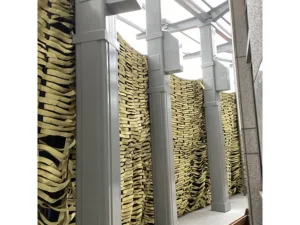 Importantly, the JCMC architectural team incorporated the structural framework directly into the building design to accommodate these large barriers. Openings, embeds and surrounding construction were engineered specifically to work with the Flex-Gate system, ensuring proper load transfer and performance at the required flood elevation.
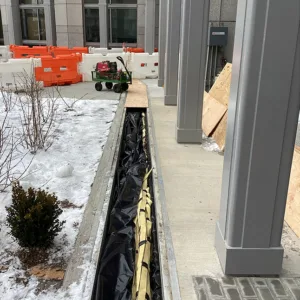 Additional measures, including interior flood doors, reinforced waterproofing at vulnerable openings and upgraded pump systems, provide redundant protection. Construction was phased carefully so trauma services and emergency operations continued without interruption. Today, the hospital is positioned to remain operational and resilient, even during severe coastal storm events and high water conditions.